




If you’re looking for genuine sheep wool textiles – the kind that really keep you warm, last for years and are made following true artisan traditions – Cucunubá should be your next destination.
In this beautiful town, located about 90 kilometers north of Bogotá, wool is not a passing trend.
In fact, wool culture is part of the local identity, the landscape and the economy of many artisan families who have dedicated their lives to shearing, spinning and weaving.
Sheep’s wool offers real comfort: it helps regulate body temperature, absorbs moisture without losing its insulating power and, when cared for properly, lasts for many years.
That’s why in several municipalities of Cundinamarca and Boyacá an entire production chain has grown around wool.
Nobsa in Boyacá and Cucunubá in Cundinamarca have become, over the years, emblematic centers of sheep’s wool textile production.
Heirs to a tradition preserved over generations, entire families are involved in this value chain around the fiber.
From raising the sheep to crafting different garments, sheep wool textiles are now sold across Colombia and in various countries around the world.
Expolana 2025, a legacy that lives on
From November 21 to 23, Cucunubá will host the sixth edition of Expolana, the artisan textile fair that brings together shearers, spinners, weavers, designers and wool lovers.
The event is the successor to the emblematic Festilana, organized for years by Fundación Compartir, and Expolana has now been established as the official textile fair of the department.
For three days, sheep’s wool enthusiasts can enjoy fashion shows, commercial exhibitions and spaces where you can learn about every step of the traditional process.
If you’re looking for sweaters, vests, scarves, blankets or wool dolls made by hand, with traditional Colombian designs and traceable fibers, Expolana 2025 is the place to be.
The artisan market is complemented by a delicious showcase of local gastronomy, live music and cultural activities that turn your visit into a truly memorable experience.
On top of that, you’ll enjoy a weekend surrounded by mountains, colonial architecture and chilly nights that invite you to try on your new wool layers.

What types of textiles are made with sheep wool?
When we think about sheep wool, many people imagine just one kind of fabric.
However, this fiber can be turned into a wide range of textile structures that determine how the finished piece will look, feel and behave.
In Cucunubá and other wool-producing towns on the high plateau, three main types of textiles are combined:
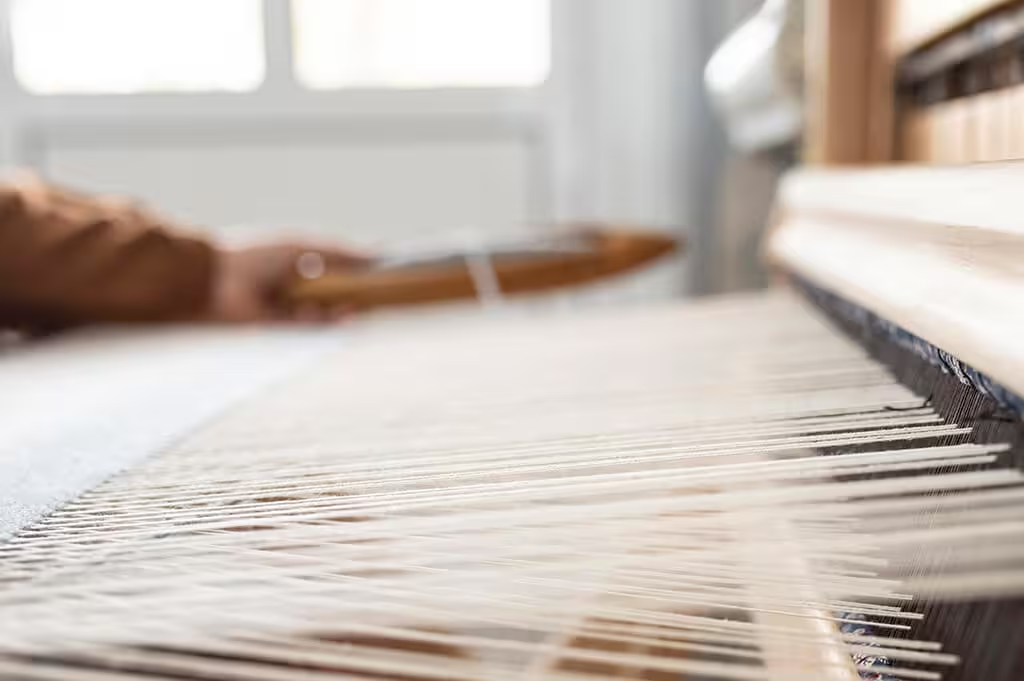
Woven fabric on the loom
Here, the wool is transformed into cloth through regular interlacing of warp and weft threads.
From these pieces of cloth come ruanas, blankets, rugs and table runners with geometric patterns, diamonds, Andean motifs and color combinations that have become a hallmark of the region.
Knitwear (hand-knitting or manual machines)
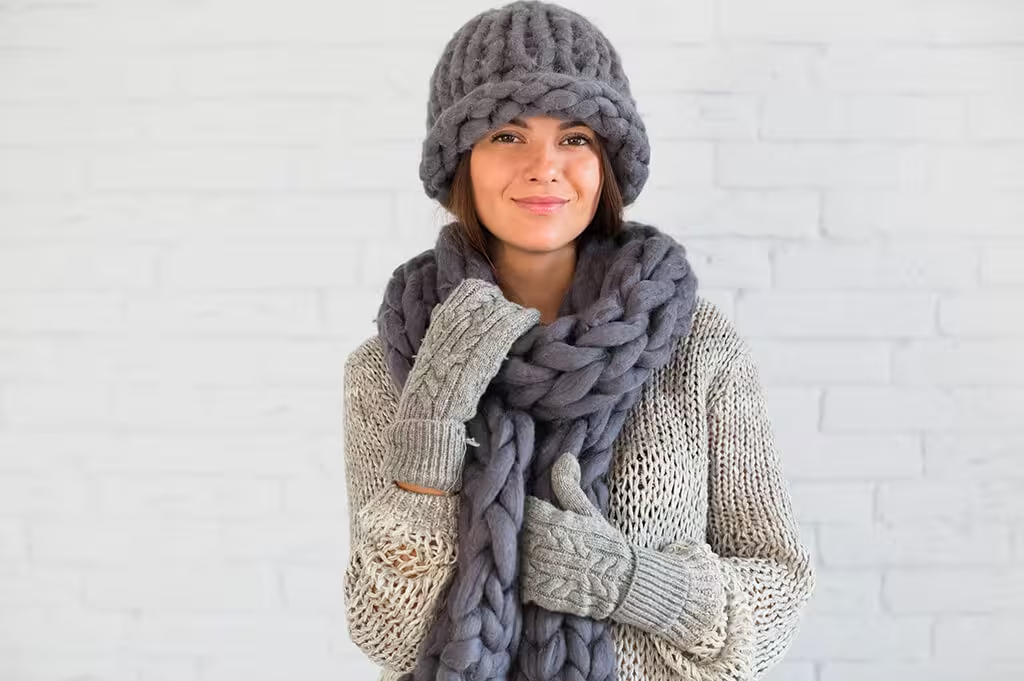
Knitwear creates a flexible, elastic structure that adapts better to the body. It’s the favorite technique for wool sweaters, vests, hats, gloves and socks.
Depending on the thickness of the yarn and the stitch used (stockinette, cables, braids, lace patterns, etc.), garments can be light and delicate or very thick and ultra-warm.
Special textiles and blends
Beyond the loom and knitting needles, sheep wool is also used in crochet, felt and blends with other natural fibers such as cotton.
These blends are common in scarves, shawls and garments for variable climates, where people are looking for a balance of warmth, softness and breathability.
In all cases, the sheep’s wool yarn is the star: its twist, thickness and quality define the drape of the textile, the level of insulation and the texture you feel against your skin.
That’s why, when you see labels at Expolana that read “100% sheep wool” or “sheep’s wool with cotton,” you’re looking at textiles that perform very differently from synthetic fibers.
What can you make with sheep’s wool?
The short answer is: almost anything you can imagine in terms of warmth and décor. But when we talk about sheep’s wool textiles made in an artisanal way, it helps to think about four main areas of use:
- Cold-weather clothing
Ruanas, ponchos, wool sweaters, vests, scarves, hats, gloves and thick socks make up the heart of the Andean winter wardrobe.
Sheep’s wool traps heat but still lets your skin breathe, which makes it ideal for mountain days and cold nights. - Home textiles
Wool blankets, throws for the sofa, cushions, rugs and table runners are highly valued for their durability and for the visual warmth they bring to any room.
A well-cared-for wool blanket can accompany a family for many years. - Accessories and decorative objects
From wool dolls shaped like little sheep or traditional characters to baskets, thermos covers and chair pads, wool can be turned into unique objects full of personality. - Technical and sustainable applications
In some regions, sheep’s wool is even used as thermal and acoustic insulation thanks to its ability to regulate temperature and humidity, as well as being a biodegradable fiber.
Where can you find wool textiles with traditional Colombian designs?
If you want to find sheep’s wool textiles with traditional Colombian designs, Cucunubá is one of the best destinations in the country.
However, the province of Ubaté has several municipalities that have preserved the sheep’s wool weaving tradition.
Sutatausa is another town where wool plays a key role in the local economy. In fact, the Tejilarte fair has been gaining recognition as an emblematic event for the sector.
Carmen de Carupa and Guachetá are also part of this wool tradition, with groups of weavers whose work rivals in quality with any other artisan production.
In the department of Boyacá, the town of Nobsa has become an international reference for wool textile production, especially ruanas.
Güicán de la Sierra and Firavitoba are other municipalities where you can find wool garments with beautiful designs that enrich Colombia’s artisan production.
Which sheep’s wool garments can I buy at Expolana?
Walking into Expolana means stepping into a world of color, texture and rural accents. It’s not just about buying warm clothing; it’s about taking home a piece of history and tradition.
At each stand you’ll notice the smell of clean wool, the rhythmic sound of the loom and the conversations with artisans who share the story behind every piece.
At the fair you’ll find everything from very practical cold-weather garments to delicate decorative objects.
And, of course, countless gift ideas. Below we share what you can expect from some key items you’ll definitely see at the Expolana stands.
Wool sweaters
If you’re looking for a versatile piece for cooler days, a good wool sweater from Cucunubá is always a safe bet.
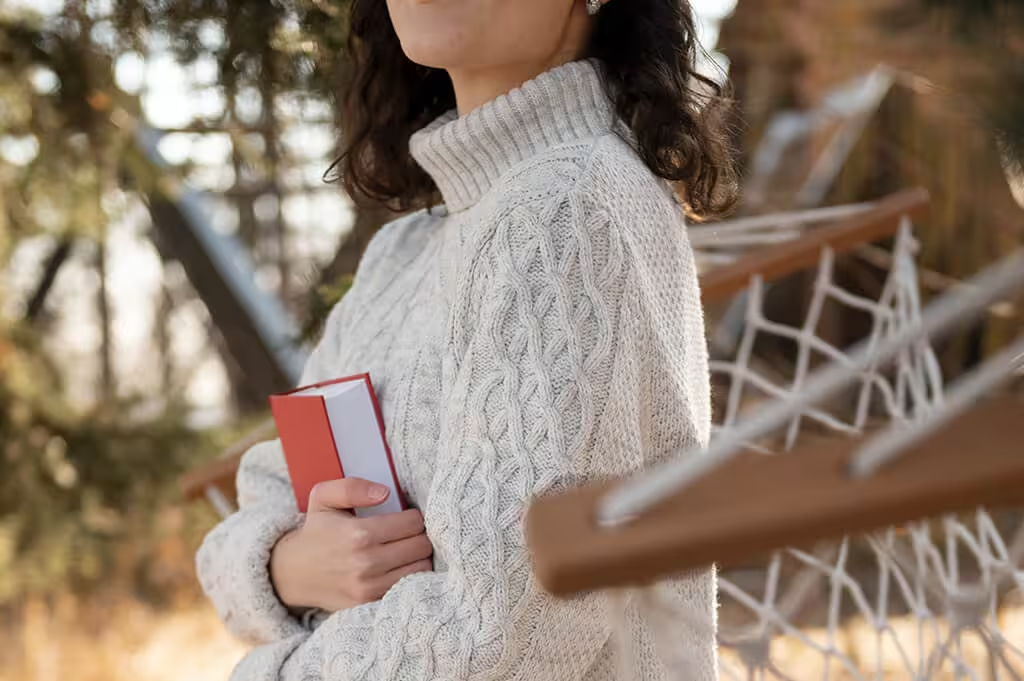
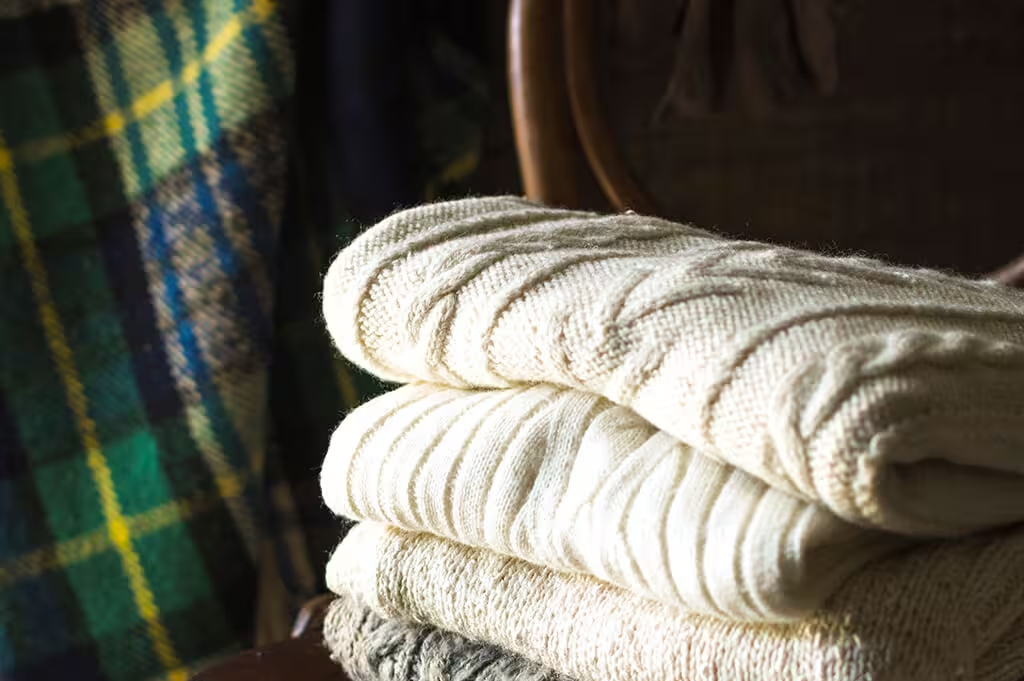
At Expolana you’ll find both classic and contemporary designs: plain sweaters in natural tones (cream, grey, brown) and others with patterns inspired by Andean geometry, stripes or raised cable designs.
Most of these sweaters are knitted with sheep’s wool in different thicknesses, which allows for different levels of warmth.
You’ll see everything from lighter pieces for daytime wear to thick, cabin-style sweaters for very cold nights.
Some artisans add wooden buttons or generous collars that offer extra protection against the wind.
Beyond their warmth, these sweaters have a special value: they support women and men who have refined their craft over years and who, collection after collection, reinterpret Colombian design from a deeply local perspective.
Wool dolls
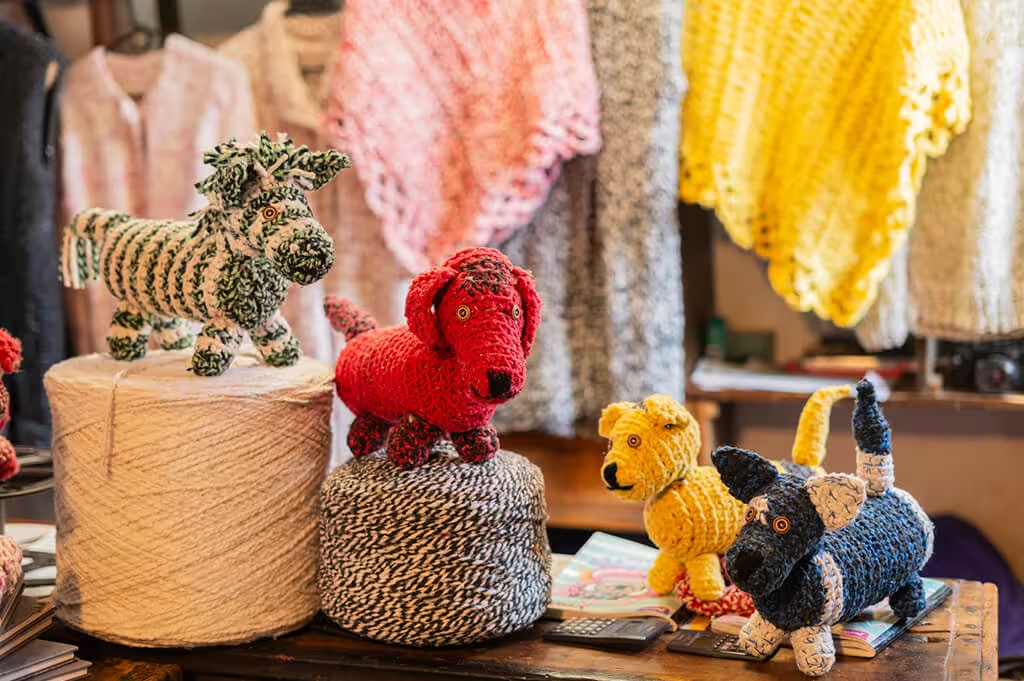
Wool dolls are one of the most charming surprises at the fair. Many artisans use leftover yarn or shorter strands to create them.
You’ll see little sheep, llamas, rural characters and animals from the high plateau, all hand-made in crochet or with knitting needles.
They’re usually made from 100% sheep’s wool or from blends that include small amounts of other natural fibers to give them structure.
They’re soft to touch, light, cozy and, above all, unique: each embroidered face has a slightly different expression and every wool curl falls in its own way.
These dolls make perfect souvenirs from your visit to Cucunubá, sweet details to decorate a child’s room or symbolic reminders of the craft that sustains the rural economy of the region.
Wool scarves
A wool scarf is probably the easiest garment to fit into your everyday life, whether you live in a cold climate all year round.
At Expolana you’ll see long and short scarves, knitted in chunky or fine stitches, with fringe or simple edges, in neutral tones and vibrant color combinations.
Many are made with softened sheep’s wool and, in some cases, blended with cotton to make them lighter and more adaptable to different temperatures.
Wool helps keep the neck and chest warm, while the artisan design turns the scarf into a statement accessory.
They’re ideal as gifts: they take up little space in your suitcase, are high value and, because they’re handmade, no two are exactly the same.
Wool blankets
The wool blankets produced on the high plateau are famous for lasting years and years. They’re usually woven on the loom in large panels that are later finished by hand.
The result is robust blankets with a pleasant weight and excellent insulation capacity, perfect for cold mountain nights or for anyone who loves sleeping well wrapped up.
At Expolana you’ll find blankets in solid colors, checks, traditional motifs and patterns that combine earthy hues with lighter shades.
Many keep the natural color of the wool (with no dyes), while others use carefully chosen dyes to create broader color palettes.
A sheep’s wool blanket is not just functional; it can also become the focal point of your bedroom or living room, folded at the foot of the bed or draped over the back of a sofa.
Wool vests
Wool vests are essential for anyone who wants to stay warm without losing freedom of movement.
At the Expolana stands you’ll see vests knitted with two needles, with front buttons, zippers or poncho-style open fronts.
Because they leave the arms free, they keep the torso warm without feeling stuffy – perfect for climates where the temperature changes throughout the day.
You’ll find minimal, understated versions in natural tones, great for pairing with shirts and urban outfits, and more rustic, chunky options designed for life in the countryside or for long days hiking in the mountains.
A good sheep wool vest quickly becomes one of those pieces you reach for again and again: over a dress, a T-shirt or a shirt, it works as a mid-layer that adds both style and comfort.
How can you tell if a wool textile is genuine and not a synthetic blend?
Here are some practical tips that textile specialists often recommend to tell genuine wool from imitations:
- Check the composition label
It sounds obvious, but it’s the first step. Look for clear percentages: “100% sheep’s wool,” “70% wool / 30% cotton,” and so on.When a garment contains acrylic or polyester, it should say so. At artisan fairs, makers are usually very transparent and will happily tell you exactly which fiber they use. - Use your sense of touch and sight
Sheep’s wool usually feels warm, with a certain natural elasticity when you stretch it gently.
It doesn’t feel plasticky or stiff. Synthetic fibers, on the other hand, tend to feel more slippery or even a bit “crunchy” when you scrunch the garment in your hand and, under strong light, they often look shinier than natural wool.
You can also look at the inside of the piece: in handmade textiles, it’s common to see tiny irregularities that show the human touch, while many industrial synthetic fabrics look extremely uniform.
- Water absorption test (only at home)
Wool is hygroscopic: it gradually absorbs moisture, darkening slightly as it gets wet, whereas many synthetic fibers repel water or soak it up without such visible changes in color.
This test is useful once you’re home and want to check a garment without damaging it. - Burn test (with great care)
Take a tiny strand of yarn and burn it in a safe place.
Natural wool takes time to ignite, smells like burnt hair and leaves an ash that crumbles easily between your fingers.
Synthetic fibers, on the other hand, melt, form a hard little bead and smell like burning plastic. This test should only be done with leftover threads and never in the middle of the fair.
Enjoy your weekend with us and visit Expolana 2025
And if you’re already planning your visit to Expolana 2025, it’s worth turning the trip into a full getaway.
Very close to Cucunubá, in Sutatausa, you’ll find Hotel Boutique Sumangá, the perfect place to rest after a day wandering through stands and wool catwalks.
From the hotel you’re just a short drive from the fair, surrounded by dramatic rock formations, mountain trails and a peaceful silence that contrasts with the hustle and bustle of the day.
Sumangá is an intimate hotel designed for couples who want to disconnect, enjoy nature and, if they travel with their dog, feel truly welcome in a pet-friendly space.
After choosing your new wool blankets, scarves or vests, you can return to a cozy room, enjoy a good coffee, gaze at the stars and try out your new purchases while you soak in the cool mountain air.
If what you’re looking for are genuine sheep’s wool textiles, Colombian design and a complete travel experience, the perfect combination is clear: Expolana in Cucunubá during the day and Hotel Sumangá in Sutatausa to unwind at night.