


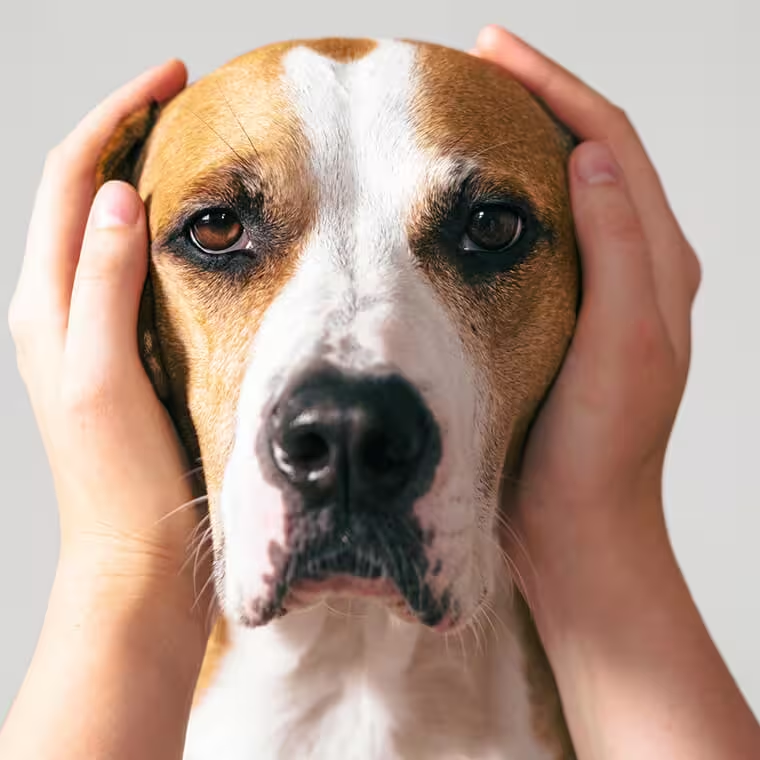

We usually picture December with lights, music, and special moments with family. But for many dogs at Christmas, the story looks very different.
Loud fireworks, sudden flashes, and noises they don’t understand can turn the holiday season into a very stressful time.
If you live with a dog that’s sensitive to fireworks, you’ve probably seen it: trembling, heavy panting, trying to hide, or desperately looking for a way to escape.
The good news is that there are ways to manage firework-related anxiety and reduce your dog’s fear.
With the right strategies, backed by veterinary guidance and scientific evidence, you can help your dog go through this season feeling much safer and more relaxed.
Dogs at Christmas: Why Firework Noise Affects Them So Much
Dogs hear higher frequencies than humans and perceive distant sounds much more intensely.
When fireworks explode, they don’t just hear the “bang” you hear. They pick up a whole range of vibrations that can be overwhelming.
Technical articles on fireworks and dogs describe how loud, sudden sounds can trigger very negative reactions — from mild anxiety all the way to intense fear, especially in sensitive animals.
On top of that, fireworks seem to appear out of nowhere: a boom, then another, whistling sounds, flashes in the sky, the smell of smoke.
Your dog doesn’t know there’s a celebration. All they perceive is danger.
Veterinary literature often talks about noise fears and noise phobias. In these cases, fear becomes intense and shows up repeatedly during storms, thunder, or fireworks.
What Do Dogs Feel When Fireworks Go Off?
During fireworks, many dogs experience an alarm response very similar to a panic attack.
They may show increased heart rate, fast breathing, muscle tension, drooling, and a desperate search for a safe place or for the person they trust the most.
Beyond the sound itself, the flashes of light, the smells, and the agitation in the street all contribute to a feeling of confusion and helplessness.
Some dogs freeze and can’t move, while others run around without direction, trying to escape the noise.
That’s why many animal welfare organizations report a spike in lost dogs at Christmas compared to other times of the year.

Signs of Anxiety and Fear of Fireworks in Dogs
Recognizing the signs early helps you act before things get worse. Some of the most common signs described in dogs are:
- trembling
- heavy panting without exercise
- dilated pupils
- constant whining, barking, or other vocalizations
- trying to hide in bathrooms, closets, or under furniture
- destructive behavior while trying to escape
- loss of bladder or bowel control in severe cases
When these reactions show up every time there are fireworks, you’re dealing with a noise anxiety problem.
At that point, it’s important to manage it with planning and, in many cases, with the help of a professional.
How to Protect Dogs from Firework Noise at Christmas
A key part of managing this issue is preparing the environment so your dog can feel as safe as possible during the holidays.
Veterinary associations and reference centers agree on one thing: it’s best to plan ahead for fireworks season and take specific measures before the first loud bang.
How to Protect Your Dog from Fireworks at Home
To reduce the impact of firework noise at Christmas, different animal protection guides recommend:
- Keeping your dog indoors during peak firework hours.
- Creating a safe space in an interior room with their bed, blankets, and familiar toys.
- Closing windows and curtains to muffle both the sound and the flashes.
- Playing soft music or background noise to help mask the explosions.
The most important thing is that this place feels like a refuge, not a punishment.
You can start associating it with positive experiences a few days in advance: treats, gentle cuddles, and calm playtime, so your dog learns to see it as their safe “den” for Christmas.

How to Take Care of Your Dog During a Firework Display
When people ask how to look after their dog during a firework show, vets and animal organizations are very clear: don’t take your dog to the firework display.
If you know there will be fireworks near your home:
- Make sure your dog is wearing a collar with an up-to-date ID tag and, ideally, has a microchip registered with current details.
- Avoid leaving them alone during the noisiest moments; your calm presence is an important anchor.
- If you need to take your dog outside, always use a well-fitted leash and choose quieter times and routes, far from the center of the fireworks.
Your own attitude matters too: talking in a calm voice, keeping your routine as normal as possible, and not scolding your dog for being afraid can significantly reduce extra stress.
What Can You Give a Dog for Fireworks?
A responsible answer is simple: only what your veterinarian recommends after assessing your dog.
Reviews of treatments for firework fears in dogs show that anti-anxiety medications can be very useful, especially when combined with training, to significantly reduce signs of fear in dogs with noise phobia.
In addition, some studies and guidelines mention the use of:
- calming nutraceuticals and supplements
- dog-appeasing pheromones in diffusers
- products based on ingredients with potential relaxing effects
However, the decision about the best combination (or whether to use anything at all) should always be made by a professional.
Your vet will consider your dog’s age, weight, medical history, and level of anxiety.
Self-medicating, using human sedatives, or trying homemade remedies without supervision can be dangerous.
Strategies to Manage Canine Anxiety: Tellington TTouch, the 3-3-3 Rule and Other Techniques
Beyond the environment and medication, there are several emotional management and training techniques that can help your dog feel safer around fireworks.
How the Tellington TTouch Method Helps Noise-Sensitive Dogs
The Tellington TTouch method has become popular as a gentle way to work with nervous or fearful dogs.
It involves applying soft, circular touches over the body, sometimes combined with elastic wraps that create a mild sensation of containment.
Specialized sources explain that, when applied correctly, this method can help some dogs relax and reduce tension in situations like fireworks.
It should always be seen as a complement to veterinary care, not a replacement.
If you want to try it with your dogs at Christmas, the ideal is to learn from a certified practitioner and practice in calm moments.
That way your dog will associate it with peace and not only with scary situations.

What Is the 3-3-3 Rule for Canine Anxiety and How Can It Help at Christmas?
The 3-3-3 rule is mostly used for recently adopted dogs.
It’s a simple guideline: a dog needs about 3 days to start relaxing in a new home, 3 weeks to show their real personality, and around 3 months to feel fully secure.
Even though it was created for home adaptation, it reminds us of something very useful when we think about dogs at Christmas: change and fear take time.
Applying this idea to fireworks means:
- respecting your dog’s pace
- not expecting them to “get over” their fear in a single night
- introducing changes gradually (for example, sound training at low volume long before the holidays)
Seeing it as a process avoids frustration and encourages you to treat anxiety as something you support and guide, not something you try to “force away”.
How to Calm Your Dog’s Anxiety Without Punishing or Overprotecting Them
Behavior specialists often emphasize that the goal is not to “ignore” your dog, but not to overreact either.
Some helpful guidelines:
- Be available as a safe figure, offering gentle physical contact if your dog seeks it.
- Use a steady, calm voice and avoid shouting or reacting dramatically to every bang.
- Don’t force your dog toward windows, balconies, or spots where the noise is louder.
- Avoid punishment or jokes like “you’re overreacting,” which only add more stress.
When fear is very intense, these measures alone won’t solve the whole problem.
But they do help your dog avoid linking your presence with more tension.
When to Talk to Your Veterinarian About Firework Anxiety
Not every dog that gets a bit nervous around fireworks needs medication. However, there are situations where professional help can really make a difference.
Signs Your Dog Needs Professional Help
Various behavior articles and veterinary associations recommend seeking help if you notice any of these situations:
- Your dog panics at any noise that sounds like fireworks or thunder.
- They have tried to escape by scratching or breaking doors, windows, or fences.
- They have injured themselves trying to run away.
- They stop eating, can’t rest, and remain on high alert for hours.
- Each Christmas seems worse than the previous one, with stronger reactions every year.
In those cases, fear is no longer a one-off reaction. It has turned into a health problem that needs a tailored plan.

Medication, Pheromones, and Supplements: Options Only Your Vet Should Assess
Several specialist teams have carried out broad reviews of treatments for firework-related fear in dogs.
They’ve found that counterconditioning, relaxation training, and anti-anxiety medication are the most effective tools, especially when used together.
Your veterinarian can help you decide:
- whether short-term medication makes sense for specific firework nights
- whether synthetic pheromones or calming supplements might be useful
- which desensitization and environmental management plan fits your dog best
The key is to start before the holidays, not on Christmas Day when the fireworks have already begun.
Quieter Holidays for You and Your Dog: Planning a Firework-Free Christmas
Taking care of your dogs at Christmas also means making conscious choices about how and where you want to spend the holidays.
If you already know that your neighborhood gets very noisy with fireworks, it might be worth exploring alternatives that reduce both noise and tension.
Routines, Environment, and Alternative Plans to Enjoy Christmas with Your Dog
Here are a few ideas to make Christmas kinder to your dog:
- Plan family gatherings at times when fireworks are usually less intense.
- Let friends and family know you’ll respect your dog’s limits (you won’t force them to stay in the middle of the noise if they’d rather stay in their safe space).
- Avoid leaving your dog in kennels or brand-new places right during peak fireworks, unless it’s somewhere they already know and relax in.
Turning Christmas into a more peaceful shared experience helps your dog associate this season with safety, not fear.

Peaceful Getaways Near Bogotá: Spend Christmas with Your Dog Away from Fireworks
Another way to protect your dogs at Christmas is to leave the city behind and head for quieter destinations where fireworks don’t dominate the night.
In the rural areas of Cundinamarca, mountain towns offer fresh air, starry skies, and a much slower pace than the capital — perfect for helping both you and your dog feel calm.
On that map of quiet places, you’ll find Hotel Boutique Sumangá, in Sutatausa:
a pet-friendly hotel surrounded by nature, facing the cliffs, where silence and good rest — for humans and pets — are a real priority.
Far from the constant explosions, with spaces designed for couples traveling with their dog, Sumangá becomes a serene refuge to spend Christmas without sudden scares.
Choosing a getaway like this doesn’t just protect your dog’s anxiety.
It also gives you a different kind of Christmas: more mindful, slower, and truly connected with what matters most — sharing calm, cozy moments with the ones you love.